How to write a clear, factual incident report at a daycare
A child falls off a low climber. A toddler bites another toddler. A preschooler runs into a doorframe. None of these are catastrophes. Most days at a childcare center end without anything notable happening. But when something does happen, the incident report is the record the child, the family, and the next staff member who reads it will all rely on.
Write it well, and it tells everyone what happened, what was done, and what to watch for. Write it poorly, and the same event becomes a fog of competing memories within a week.
This guide is for directors and staff writing reports. It covers what to record, what to leave out, how to handle the parent conversation that follows, and why near-misses are worth writing too.
What the report is actually for
Incident reports have three readers, and writing for all three at once is the trick.
The child is the first reader, even though they will not read it themselves. The record is theirs. If they come down with a bump on the head an hour later, or develop bruising the next day, the report is what the parent and the doctor will look at to understand what happened. The child cannot reconstruct it later. The staff who were there can, but only if it is written down quickly.
The parent is the second reader. They were not there. The report, plus the conversation at pickup, is how they learn what happened to their child today. A vague report (such as "fell during outdoor play") leaves them filling in the blanks with worst-case imagination. A factual one tells them what to look for tonight and what to mention if they call the doctor.
The next staff member is the third reader: the person who has the child tomorrow when the regular educator is off, or the float teacher covering the room next week. They need to know that a particular climber gave a particular child trouble, that this toddler and that toddler should not be at the sand table together for a while, that this preschooler is still favoring her left wrist.
When all three readers are served, the report is also the document that licensing or insurance would request if it ever came to that.
Write it within thirty minutes
Get to the report within thirty minutes of the incident if at all possible, while staff still remember the small details. Reports written from memory four hours later are missing the parts that matter most: which foot slipped, which child started the squabble, how long the crying lasted, whether the staff member was right there or two steps away.
If the room cannot be left, write the time and the key facts on a phone note or a piece of paper as soon as the immediate situation is handled, and finish the formal report at the next break. A scrawled "10:42, slipped third rung of yellow climber, landed right hip, cried 30 sec, stood up" is a far better foundation than waiting an hour for the perfect sentences.
What to record
In plain language, in order, capture:
- When the incident happened (a time, not just "this morning")
- Where in the center (which room, which area, which piece of equipment)
- Who was involved (the child or children, the staff who saw it, any witnesses)
- What happened, observed and reported in the order it occurred
- What was done immediately (first aid given, child comforted, area cleared, supervisor notified)
- The child's condition at the time of writing (still upset, calm, marks visible, no marks)
- What was communicated to the parent and how (in person at pickup, phone call, written note)
- Anything to watch for in the next few days
Write what you saw, not what you assume
This is the part that separates a useful report from a useless one. The job of the report is to record what was observed.
Write: "Liam was holding the climber's top bar with both hands. His foot slipped from the third rung. He landed on the rubber mat below, on his right hip. He cried for about 30 seconds, then stood up on his own."
Don't write: "Liam wasn't paying attention and lost his grip on the climber. He took a hard fall but was probably okay."
The first version is observable, specific, and lets the reader judge the seriousness. The second buries the actual events under the writer's interpretation and reassurance.
Two practical rules help:
- Distinguish what you saw from what you assume. "Was holding the bar with both hands" is observed. "Wasn't paying attention" is a guess. If you did not see whether they were paying attention, do not write that you did.
- Don't soften, don't dramatize. Neither "took a hard fall" nor "had a little tumble" tells the reader what happened. "Fell from the third rung onto the mat below" does.
The same applies to behaviour incidents. "Mia bit Oliver on the upper arm during play in the block area, leaving a visible bite mark" gives the next reader everything they need. "Mia had a rough morning" tells them nothing.
What to leave out
A report should not include:
- Speculation about cause when nobody saw the cause
- Judgments about either child's character ("she's been acting out lately")
- Apologies, reassurances, or anything aimed at the parent's emotional comfort. Those belong in the conversation, not the document.
- Other children's names unless they were involved and you have permission to name them. "Another child" is fine otherwise.
The reason something is left out should be that it is not factual or not relevant, not that it would be uncomfortable to include. If a staff member was attending to another child when the incident happened, write that. If supervision was thin in that moment, write that. The record is the actual one, not the favourable one.
The conversation that follows
The report is the document. The conversation is what the parent will remember.
Best practice is to tell the parent in person at pickup, before they ask. Lead with what happened, then what was done, then how the child is now. Hand them the written report at the same time, or send it through whichever channel the center normally uses for parent communication. Ask if they have questions. Note their reaction and any commitments made in a follow-up section of the report.
If the child went home before pickup, or before the report could be written, call the parent. Same structure: what, what was done, how the child is, what to watch for.
Don't wait until pickup to write the report so the parent and the report happen at the same moment. The report needs to be written while the details are fresh, even if the conversation has to wait.
Near-misses are worth writing too
A near-miss is when something almost happened but did not. The toddler nearly fell off the climber but caught herself. Two children almost collided at the bottom of the slide. A child got the door open during outdoor time but a staff member was right there.
These do not always feel report-worthy in the moment because nothing bad came of them. But they are the reports that improve a center over time. If three near-misses happen on the same climber over a month, something about the climber or the supervision around it needs to change. Without the reports, the pattern is invisible.
Use the same structure as a full incident: time, place, who, what happened, what was done, what to watch for. Mark them clearly as near-misses so they sort separately from actual incidents in your records.
How KidzLog supports this
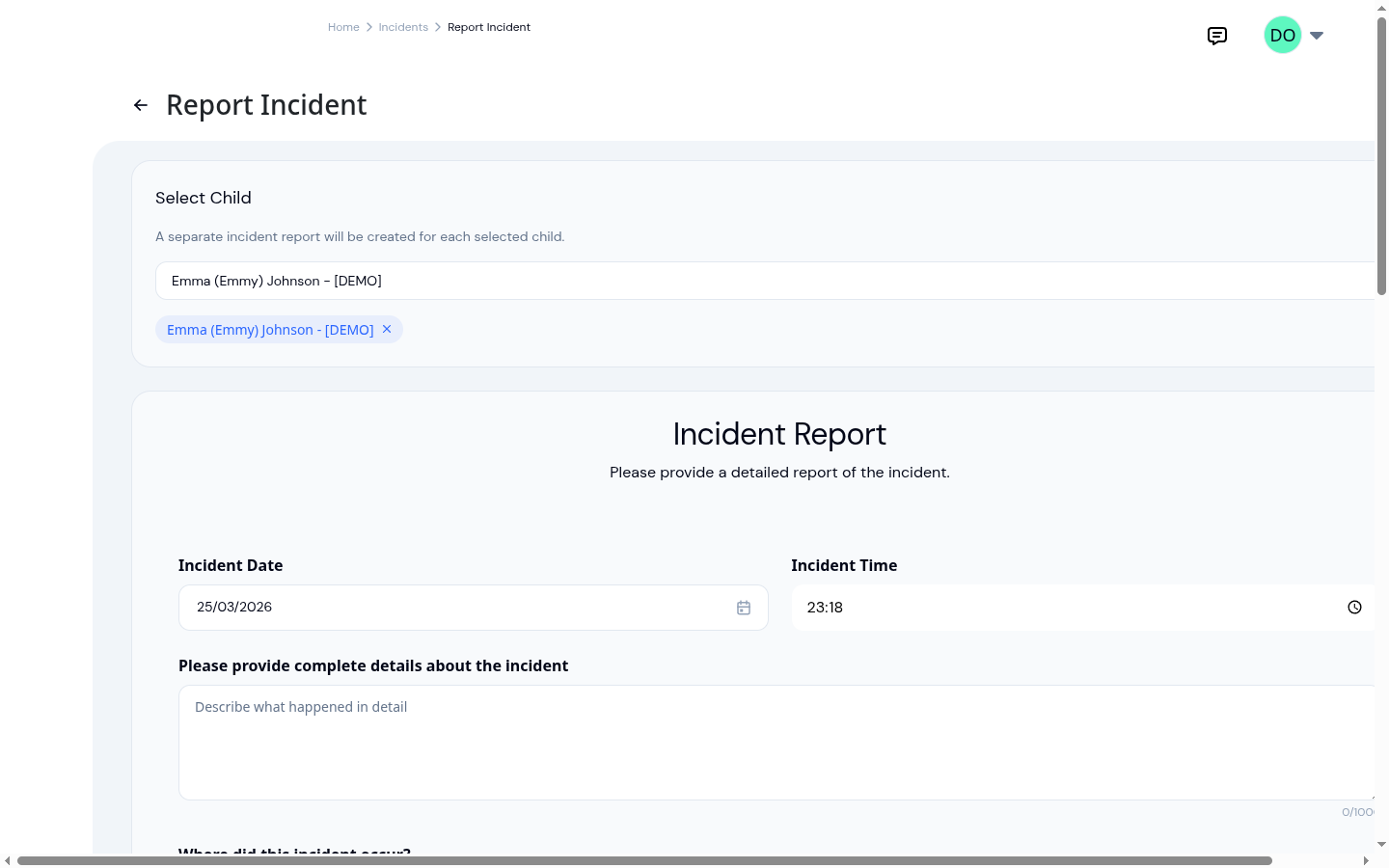
KidzLog's incident reporting captures the report as a structured form: time, place, child, what was observed, the cause if known, the assistance given, whether emergency services were called, and who reported it. Photos can be attached when they help tell the story.
The workflow is built around a teacher writing the first version on the room iPad and a director or supervisor reviewing before the report reaches the parent. The supervisor approval gate sits between draft and parent view, so the report can be cleaned up or confirmed before the parent sees it without losing the speed of writing it down while it's fresh.
The parent acknowledgment, signature and timestamp, is captured on the report itself, so the conversation at pickup is documented in the same record rather than in a separate log. Reports stay in the child's record and searchable from the incidents list, which is what makes them usable later when public health or licensing asks for them.
The standard
A good incident report should leave the next reader — the parent, the doctor, the covering staff member — able to picture exactly what happened, and able to act on it. That is the bar. Write to it, every time, and the report does the rest.
Ready to Simplify and Organize your Daycare?
Get started with KidzLog today!
KidzLog Team
Related Articles

September Update: Incident Reports and Records
Reopen and correct an approved incident report, choose when parents get the email, send families a note on declined...
New: A Child's Address and Health Care Provider
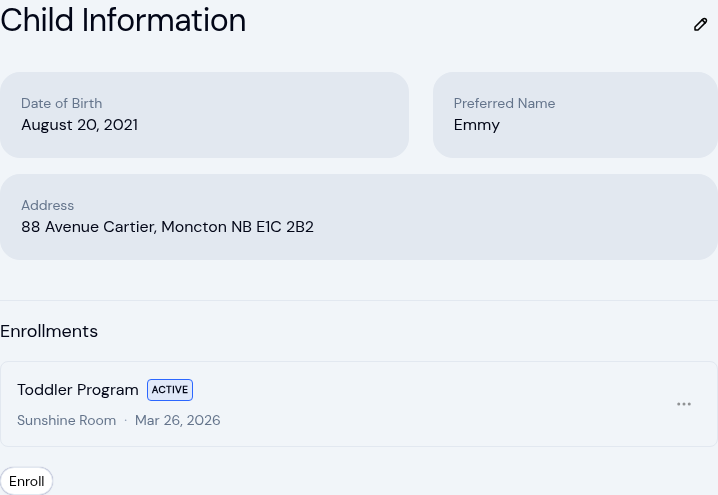
The child record now holds the child's own address and their health care provider. Both show on the profile, in Health...
Sorting your incident log by type and severity
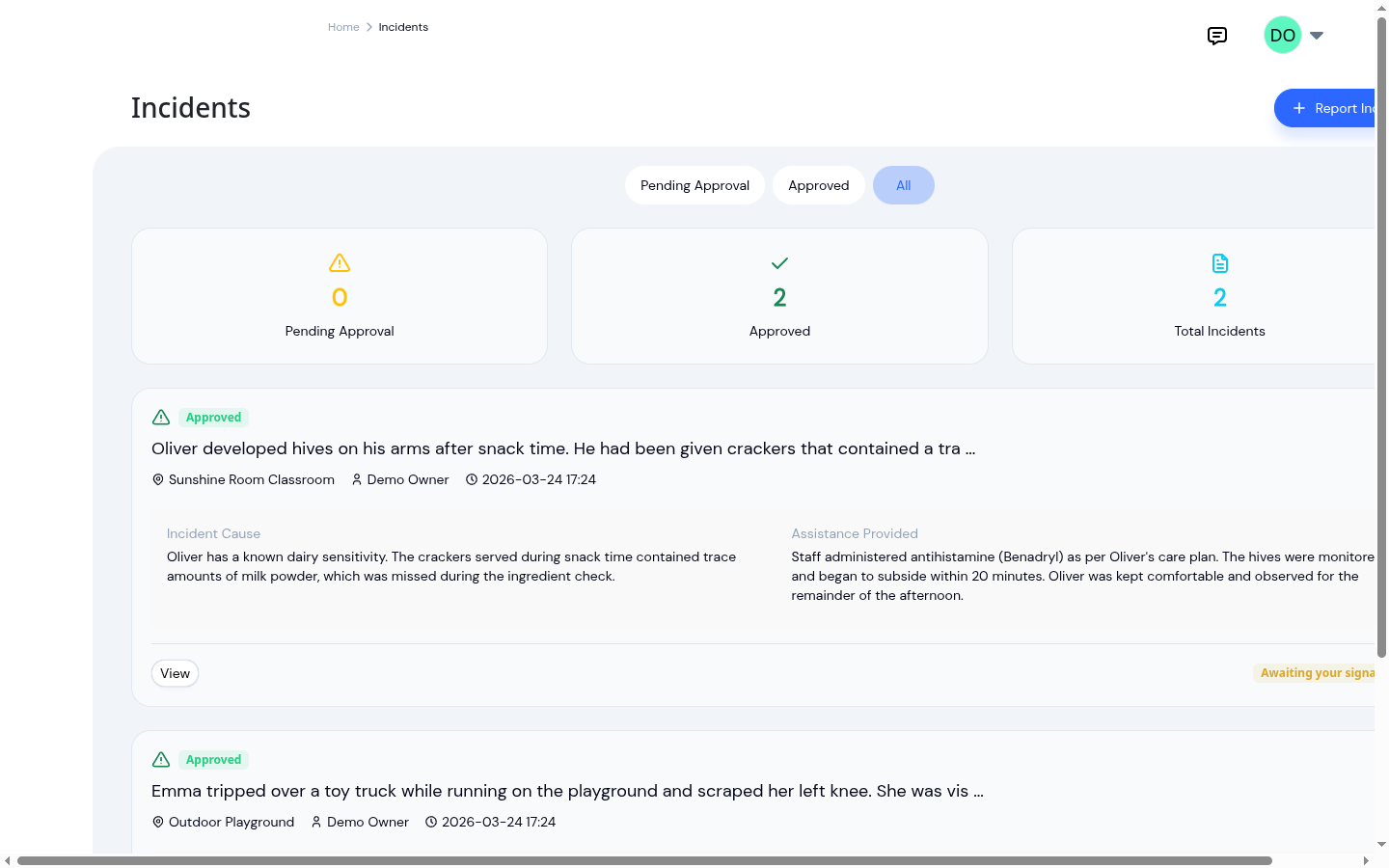
A scraped knee and a reportable reaction look identical in most logs. Sorting by type and severity makes a flat record...